
Horse science
How to Estimate a Horse's Age by Its Teeth
· 1 min read
Up to about five years old, a horse's age is estimated from when its incisors erupt. After that, it is estimated from how the incisors have worn.
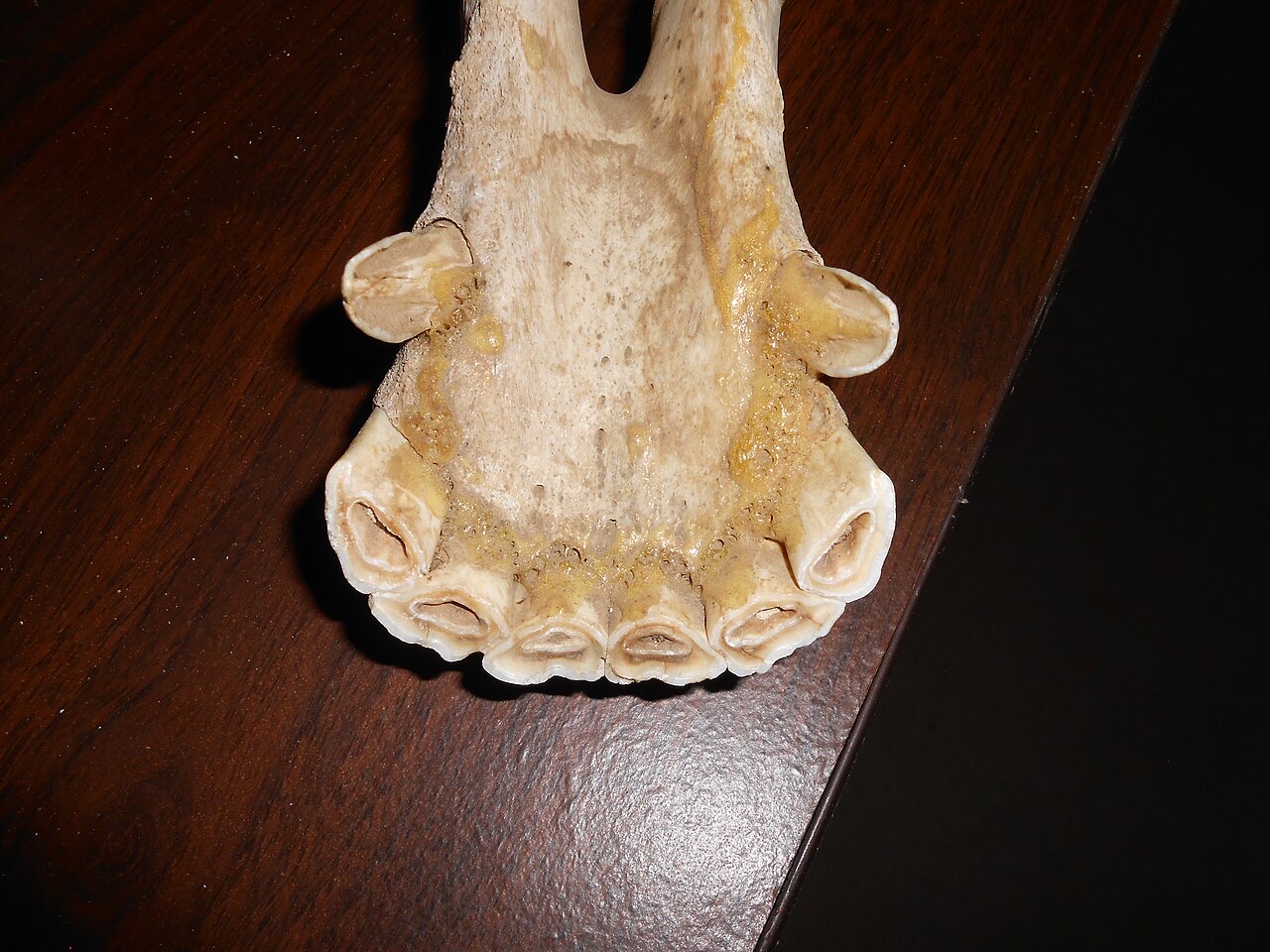
A horse's age is estimated from its incisors. The deciduous (baby) central incisors erupt within the first week after birth, the intermediate incisors at 4 to 6 weeks, and the corner incisors at 6 to 9 months. The permanent central incisors erupt at about 2.5 years, the intermediates at about 3.5 years and the corners at about 4.5 years. By about five years old, all the permanent teeth are in place.
After five, age is judged from the wear pattern of the incisors.
- Cups: the hollows in the center of the chewing surface. They disappear in turn, and by about 11 to 12 years old they are gone from all the incisors.
- Dental star: a yellowish-brown mark that appears as the tooth wears. Its shape and position change with age.
- Shape of the chewing surface: oval and elongated in young horses, it becomes round and, with age, closer to triangular.
- Angle seen from the side: in young horses the upper and lower incisors meet almost in a straight line. With age they slope increasingly forward.
A horse's teeth continue to erupt slowly throughout life, and the chewing surface wears down by about 2.5 mm a year until around 17 years old. Galvayne's groove on the upper corner incisor is said to appear near the gum line at about 10 years old and to reach the full length of the tooth at about 20. However, the Merck Veterinary Manual considers it of little use for judging age because it varies widely between individuals.
Once all the permanent teeth are in, wear varies with feed, habits and dental care, so accuracy drops. Treat an age estimated from the teeth as a range, and consult a veterinarian for an accurate assessment.