
Horse science
The Horse's Digestive System: A Small Stomach and a Long Gut
· 4 min read
A horse's stomach holds only 8 to 10 litres, 9 to 10% of the digestive tract by volume. Microbes in the cecum and large colon ferment forage into energy, so horses should be fed little and often, and feed changes should be made slowly.
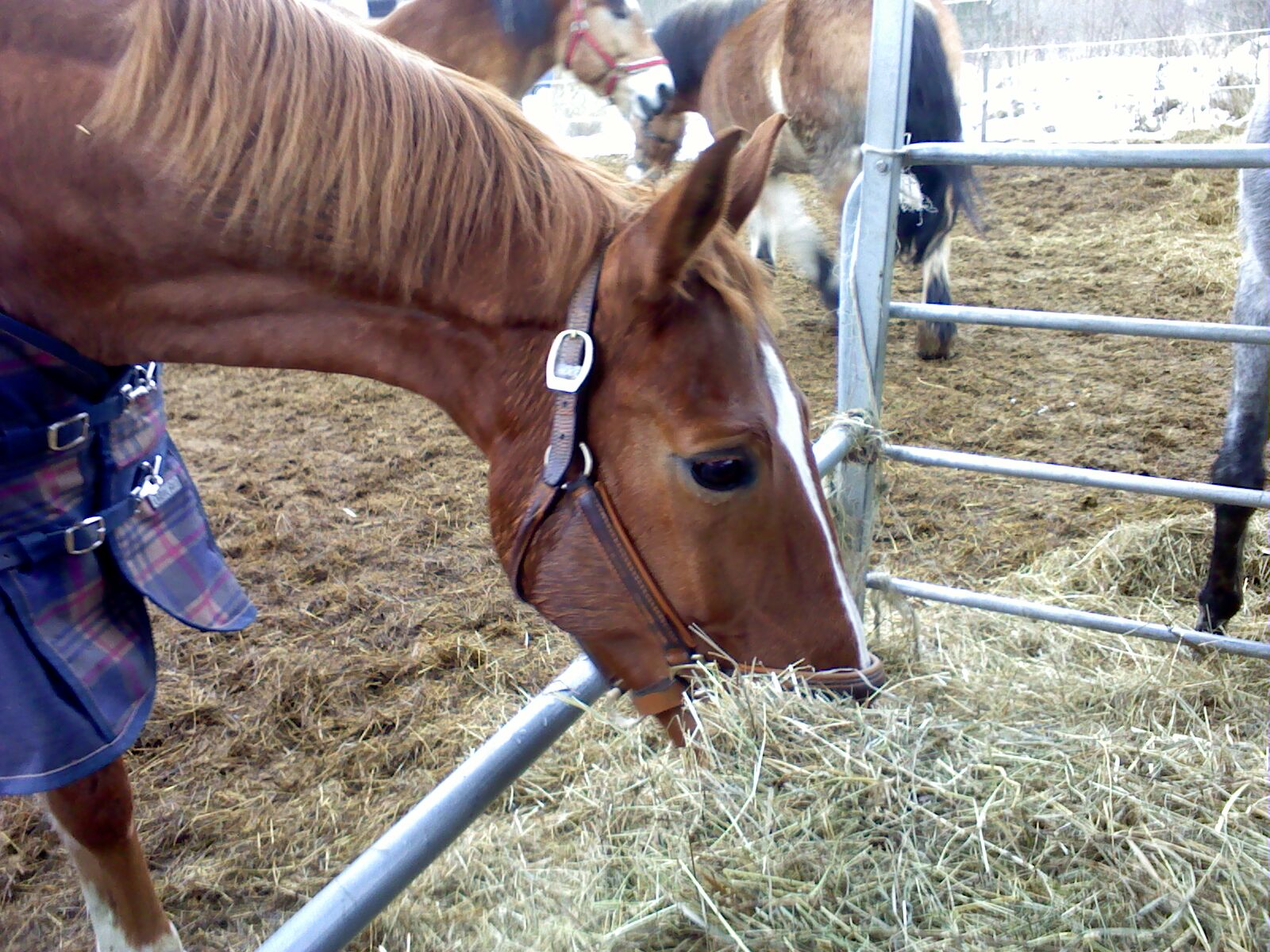
A horse's stomach is small for its body size and holds only about 8 to 10 litres of food and water. The intestines that follow it, by contrast, are long and large. Horses evolved to graze on small amounts of grass over long periods, and the tough fibre in grass is broken down not by the stomach but by microbes living in the rear part of the gut. The small stomach and long intestine are adapted to this way of eating.
A small stomach, with fermentation at the back
Animals with a single stomach, such as people and dogs, break down meat, fruit and vegetables with enzymes in the stomach and small intestine. Cattle and sheep have a stomach with several compartments, and in the largest, the rumen, microbes break down grass first. The horse combines the two systems. It has only one stomach, but it ferments forage in the rear part of the digestive tract, which is why it is called a hindgut fermenter. Ruminants, in contrast, ferment in the front part (the foregut).
The difference is clear in the proportions by volume. According to Ohio State University, the stomach makes up 70% of the digestive tract in ruminants but only 9 to 10% in horses. In the horse, the small intestine accounts for 30%, the cecum for 16% and the large colon for 45%, so most of the tract is intestine.
The path food takes
Grass chewed finely in the mouth mixes with saliva and forms a ball that is easy to swallow. A horse produces up to about 36 litres of saliva a day, and this saliva also helps to neutralise some stomach acid. The oesophagus, about 1.4 metres long, moves food in one direction only, which is one of the reasons horses cannot vomit.
The stomach mixes food and holds it briefly before passing it to the small intestine. The small intestine runs through the duodenum, jejunum and ileum, and according to Rutgers University it is 50 to 70 feet (about 15 to 21 metres) long. The Merck Veterinary Manual states that the jejunum, the middle section, alone is about 19.5 metres. In the small intestine, enzymes from the pancreas and the intestine break down and absorb carbohydrates, proteins and fats. Horses have no gallbladder, so the liver releases bile, which helps digest fat, continuously.
After the small intestine comes the hindgut. The cecum is a large fermentation vat that holds 27 to 30 litres of food and water. According to Ohio State University, its contents stay for up to 7 hours, giving microbes time to break down fibre. The large colon that follows holds about 75 litres, and contents usually take 2 to 3 days to pass through it. As microbes ferment fibre, they produce volatile fatty acids, which supply most of the energy a horse uses.
Why "little and often" is the rule
Horses evolved grazing on small amounts of grass for more than 16 hours a day. When grazing, the stomach was rarely empty. The stomach, however, keeps producing acid even when it is empty. The lower (glandular) part of the stomach protects itself with mucus and bicarbonate, but the upper (non-glandular) part has much weaker protection. Ohio State University explains that when horses are fed large meals twice a day, the stomach stays empty for longer, and when roughage is lacking, the upper part of the stomach becomes more acidic (pH 4 or below), raising the risk of gastric ulcers.
Feeding a large amount of grain at once is also a problem. When starch that the small stomach and fast-moving small intestine cannot fully digest passes into the hindgut, it upsets the microbial balance and can lead to gas, colic (abdominal pain) and laminitis. The same source recommends the following:
- Make forage such as hay or grass at least half of the diet.
- Give grain and concentrates in small amounts spread over several meals.
- Feed hay first and concentrates afterwards.
- Make any change in feed over 7 to 10 days, including a change in the type of hay.
- Make clean water available at all times.
The weak points of a long gut
A long, large intestine also has weak points. The Merck Veterinary Manual explains that the horse's digestive tract bends and narrows in several places, so tough, fibrous feed can easily cause a blockage. A typical site is the pelvic flexure, where the large colon folds back on itself and its diameter narrows from about 20 cm to around 9 cm. Contents slow down here, which buys time for fermentation but also lets heavy particles such as sand settle. The cecum is only loosely attached to the body, so it can twist or shift out of place when it contracts strongly.
If a horse paws at the ground, kicks at its belly, lies down and rolls repeatedly, looks around at its flank, or passes less manure than usual, it may have colic. If you see these signs, consult a veterinarian immediately.