
Horse science
Horses Sleep Standing Up: The Stay Apparatus
· 1 min read
A locking mechanism in the hind leg, the stay apparatus, lets a horse rest while standing, but a horse must lie down to reach deep sleep.
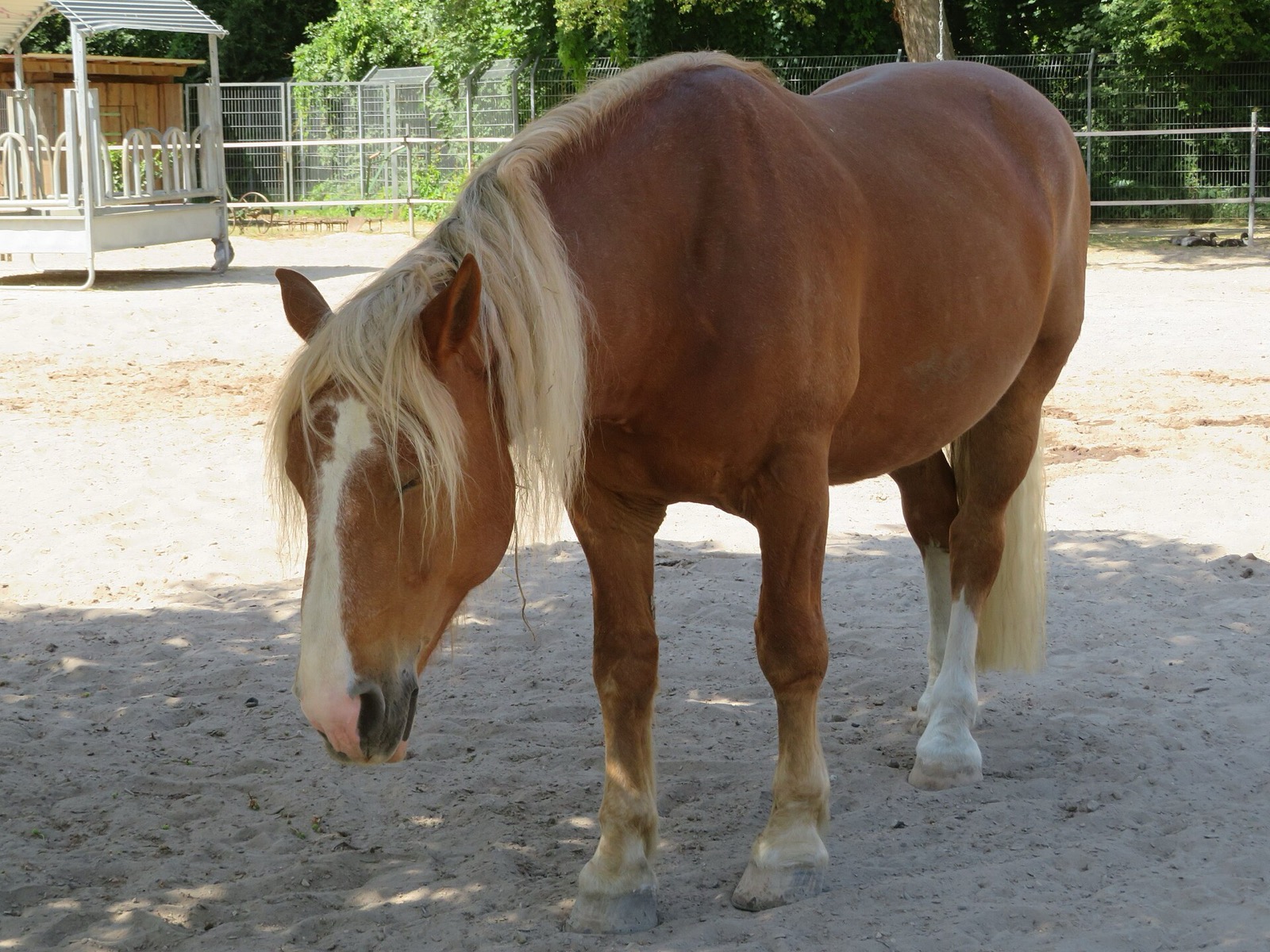
Horses take light sleep while standing. The arrangement of muscles, tendons and ligaments that keeps the legs straight with very little muscle effort is called the stay apparatus.
In the hind leg, the key part is the stifle, the horse's knee joint. When the horse hooks the patella (kneecap) over a bony ridge at the lower end of the thigh bone, the stifle locks and cannot bend. The stifle and the hock are linked so that they bend and straighten together, so when the stifle locks, the hock also stays straight. The joints below are supported by tendons and ligaments.
- The horse locks one hind leg and puts the weight of its hindquarters on it, while the other hind leg rests with only the toe of the hoof touching the ground.
- The muscles are not fully at rest. One study found that a muscle on the inner front of the thigh (vastus medialis) worked lightly while the leg carried weight, and estimated that this effort was less than 2% of what would be needed without the locking mechanism.
- Tendons and ligaments do not tire easily, so the mechanism reduces the load on the hind leg muscles not only at rest but also during exercise.
A horse cannot reach deep sleep while standing, however. REM sleep requires the muscles to relax, so the horse has to lie down, either resting on its chest or lying flat on its side.
Sometimes the mechanism does not release when it should, and the hind leg catches in a straightened position. If a horse cannot bend a hind leg or seems to drag it as it walks, consult a veterinarian.