
Horse science
How long horses live, and horse age in human years
· 4 min read
The life expectancy of a modern domestic horse is 25 to 30 years. Horses grow fast in their first four to five years and age slowly after that, so a 4-year-old horse is roughly 20 in human terms and a 20-year-old about 60.
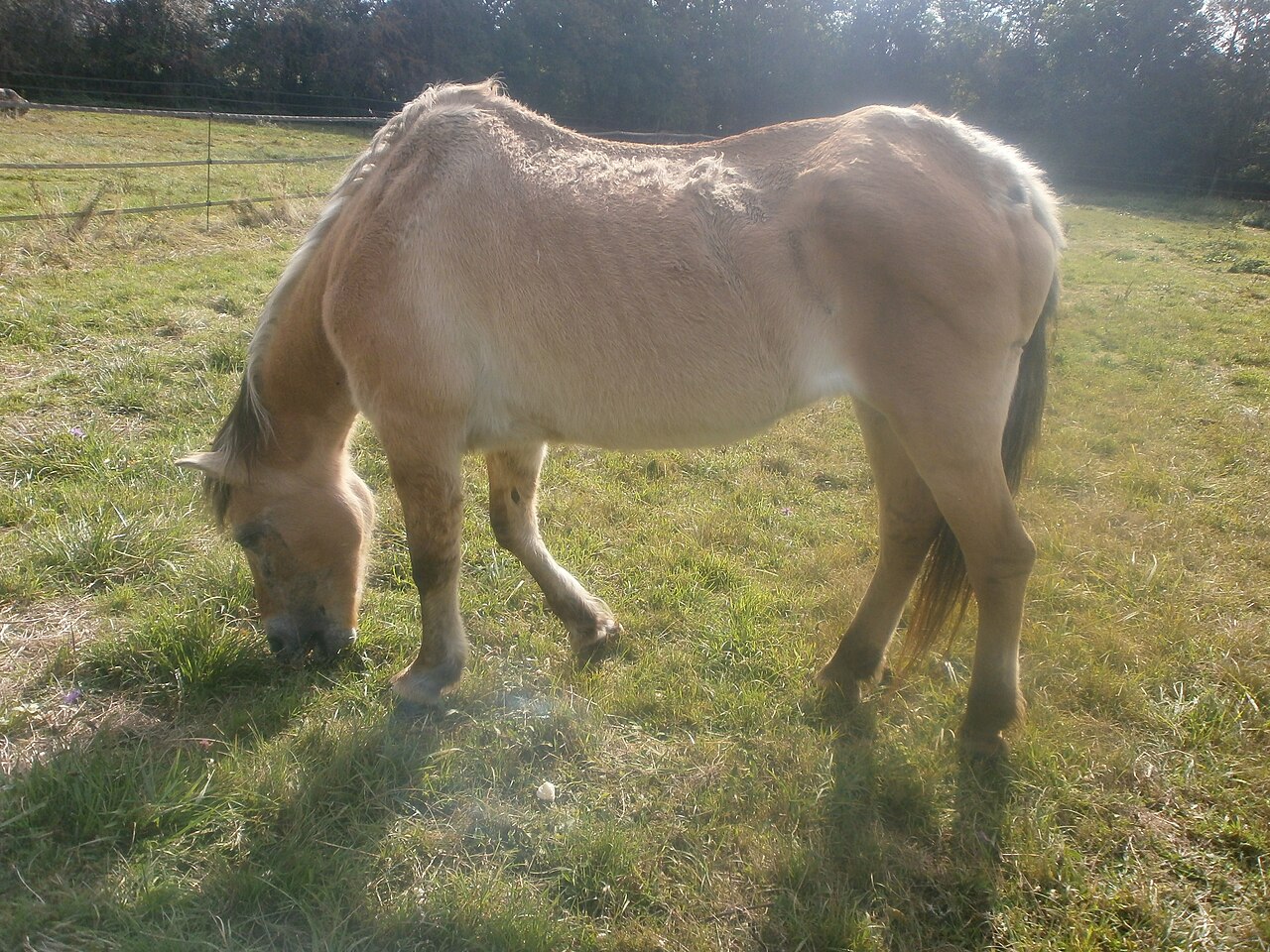
The life expectancy of a modern domestic horse is 25 to 30 years, depending on breed, management and environment. A few live into their 40s, and the oldest verified horse lived to 62. A horse grows to the equivalent of a human in their early 20s within its first four to five years, then ages slowly, at about two to three human years per year. In human terms, a 4-year-old horse is about 20 and a 20-year-old horse is about 60.
How long do horses live?
The Wikipedia article on the horse gives the modern domestic horse a life expectancy of 25 to 30 years. Horses that reach their 40s are uncommon, and older ones are rarer still. The oldest verified horse was Old Billy, born in 1760 in Cheshire, England, who died on 27 November 1822 at the age of 62. He was a barge horse that towed boats along canals and is said to have worked for a canal company from the age of two or three. More recently, Sugar Puff, once listed by Guinness World Records as the oldest living pony, died in 2007 at the age of 56.
A 2006 newsletter from the UC Davis Center for Equine Health notes that the oldest horses studied so far were mostly in their mid-40s. The same article explains that ageing is not a disease in itself, but worn body parts and a weaker immune system make disease more likely. Horses age at different speeds depending on genetics and environment, so one horse may look old at 15 while another still competes at 25.
Converting horse years to human years
There is no official standard for converting horse age to human age. Several organisations and experts have published comparison charts. The chart by Jeannie Willems, a past president of the American Association of Equine Veterinary Technicians, printed in The Horse (2016), reads as follows.
- 1 year: about 6.5 (from nursing foal through weaning to yearling)
- 2 years: about 13 (adolescent)
- 3 years: about 18
- 4 years: about 20.5 (young adult)
- 5 years: about 24.5 (physically mature)
- 10 years: about 35
- 13 years: about 43 (middle-aged)
- 20 years: about 60 (senior)
- 27 years: about 78
In other words, a horse passes 20 human years in its first four years, and after that each year equals two to three human years. The UC Davis newsletter describes a different calculation. If a mean horse lifespan of 25 years is matched to 71 human years, a 20-year-old horse is similar to a 57-year-old person and a 30-year-old horse to an 85-year-old. The charts differ by a few years, so a converted age is best used only as a rough guide to a horse's life stage.
Competition age and names for each age
Regardless of the actual birth date, most competitions in the Northern Hemisphere count a horse as one year older every 1 January. In the Southern Hemisphere the date is 1 August. Endurance riding (long-distance competition) is the exception: its minimum age to compete is based on the horse's actual age. This means a foal born in December is counted as a one-year-old for competition on the following 1 January.
There are also set names by age. A horse under one year old is a foal, and one between one and two years old is a yearling. A male under four is a colt and a female under four is a filly. From four, they are called a mare or a stallion. In horse racing these definitions vary slightly by country.
When is a horse considered old?
There is no single definition of a senior horse either. The UC Davis newsletter states that, by American Quarter Horse Association standards, a horse over 16 is considered aged. In The Horse, Willems says a 15-year-old was once thought of as a senior, but the general view today is that a horse is old from 20. She stresses, however, that some horses stay young well into their 20s while others look like seniors in their mid- to late teens, so the individual horse matters more than the number.
Both sources point to the same basics of senior horse care.
- Check the horse's body condition, coat, behaviour and attitude by eye every day.
- Increase dental checks to at least twice a year. Worn or missing teeth can stop a horse chewing its feed properly and lead to weight loss.
- Do not dismiss weight loss. The UC Davis newsletter cites research showing that horses over 20 digested less fibre, protein and phosphorus than young horses on the same diet.
- Keep exercise, feeding and travel routines as steady as possible. Older horses tend to drop down the herd hierarchy and miss out on feed, so watch them closely when horses are fed together.
Feeding, check-up intervals and disease management differ from horse to horse, so the safest course is to agree the details with a veterinarian.