
Horse science
How many teeth a horse has, and the gap where the bit sits
· 4 min read
An adult horse has 36 to 44 teeth. Every horse has 12 incisors and 24 cheek teeth; canines and wolf teeth vary from horse to horse. The bit rests in the toothless gap between the incisors and the cheek teeth.
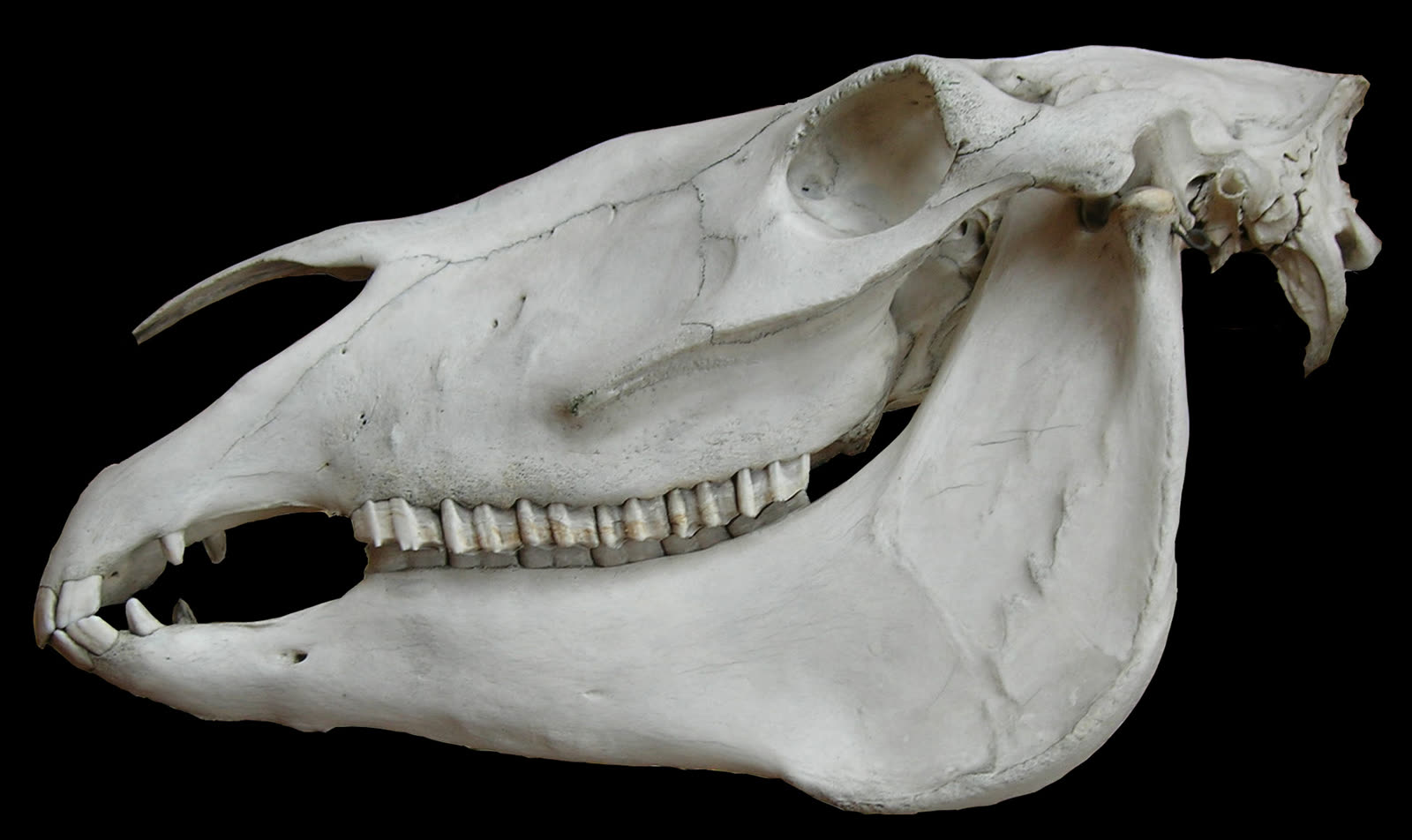
An adult horse has between 36 and 44 teeth. Every horse has 12 incisors and 24 cheek teeth, 36 in total. Whether the count goes higher depends on how many canines and wolf teeth the horse has. Between the incisors and the cheek teeth there is also a long stretch of gum where no teeth grow. This toothless gap is where the bit sits when a horse wears a bridle.
Teeth every horse has: 12 incisors and 24 cheek teeth
The incisors sit at the very front of the mouth, six above and six below. They are used mainly to bite off grass, and also in fights over rank within the herd or in self-defence. The cheek teeth form four rows of six, on each side of the upper and lower jaws, 24 in all. Anatomically, the front three in each row are premolars and the back three are molars. Because they look and work almost the same, they are grouped together as cheek teeth. The six teeth in each row press tightly together and act like one long grindstone, grinding grass as the jaw moves from side to side.
Foals normally have 24 milk teeth: 12 incisors and 12 premolars. Molars, canines and wolf teeth have no milk teeth before them and come in as permanent teeth from the start. By about five years old all the permanent teeth are in, and the horse is said to have a "full mouth". According to Dixon's AAEP paper, a horse's teeth keep erupting by 2–3 mm a year after that, replacing what is worn away by chewing.
Teeth that vary: canines and wolf teeth
Canines grow in the toothless gap between the incisors and the cheek teeth. Male horses (stallions and geldings) normally have four, two above and two below, which erupt at four to six years of age. Wikipedia notes that fewer than 28% of mares have any canines, usually only one or two, and these may be only partly erupted. In an adult Thoroughbred a canine is 5–7 cm long, but most of it stays hidden in the gum. The lower canines sit further forward than the upper ones, closer to the corner incisors, so upper and lower canines do not touch. This is given as the reason they tend to build up tartar.
Wolf teeth are a completely different tooth. They are small remnants of the first premolar, which did a real job in the horse's distant ancestors, and are rarely longer than 1–2 cm. They usually sit just in front of the first upper cheek tooth. The 2004 AAEP paper says they erupt at 6 to 18 months of age. Between 13% and 32% of horses are reported to have wolf teeth, and Wikipedia says they occur equally in males and females. They occasionally appear in the lower jaw as well, so a horse with four canines and a full set of wolf teeth has 44 teeth.
The toothless gap: where the bit sits
The stretch of gum with no teeth between the incisors (or the canines, if present) and the first cheek tooth is called the interdental space, or the "bars of the mouth". When a horse wears a bridle and bit, the metal bar of the bit rests here. Wikipedia explains that if the bridle is adjusted so the bit sits too low or too high, it can push against the teeth and cause discomfort.
The gap also shapes how the cheek teeth are arranged. Unlike human teeth, they do not follow a rounded arch but stand in separate straight rows. Dixon explains that, as a result, the first cheek tooth leans slightly backward and the last two lean slightly forward, so they squeeze the whole row together. This keeps the six teeth tightly packed so they work as a single unit.
Points for riders, and common misunderstandings
- Canines and wolf teeth sit in different places. The Brooke manual separates them: canines lie between the incisors and the cheek teeth, while wolf teeth sit further back, right against the first cheek tooth. Wolf teeth are the ones more often linked with bit problems.
- Not every wolf tooth is a problem. Dixon's view was that most small wolf teeth in their normal position cause no harm. Large or displaced wolf teeth, however, can interfere with the bit, or the cheeks and lips can be pressed against them by tack and cause discomfort. "Blind" wolf teeth, which have not come through the gum, can lie as much as 3 cm in front of the cheek teeth.
- The bars are not the same as gaps between cheek teeth. The space between the incisors and cheek teeth is normal anatomy. When cheek teeth drift apart and food packs into the gap, it can cause drooling and bad breath, and the Brooke manual describes these gaps as usually very painful.
- Shaping a "bit seat" is debated. Some rounding of the front of the first cheek tooth is done so the cheek is not pressed against a sharp edge, but Wikipedia notes that the practice is controversial.
If a horse starts tossing its head or resisting the bit, its teeth and mouth are worth checking first. Wikipedia notes that most authorities recommend a professional dental check every six months or once a year. Do not examine or work on a horse's mouth yourself; it is safest to consult a veterinarian.
Sources
- Wikipedia, Horse teeth
- Proceedings of the AAEP Annual Convention, P. M. Dixon, The Gross, Histological, and Ultrastructural Anatomy of Equine Teeth, 2002
- Proceedings of the AAEP Annual Convention, Equine Canine and First Premolar (Wolf) Teeth, 2004
- The Brooke, Working Equid Veterinary Manual, chapter 10, The teeth: ageing and a practical approach to dentistry