
Riding
How to ride the correct diagonal at the rising trot
· 4 min read
On a circle or through a corner at the rising trot, the correct diagonal means rising as the horse's outside foreleg moves forward and sitting as that leg lands. Check with a quick glance at the outside shoulder, and if it is wrong, sit for one extra beat to change.
At the rising trot, the "diagonal" is the diagonal pair of the horse's legs that is on the ground at the moment the rider sits in the saddle. On a circle or through a corner, the correct diagonal means sitting while the horse's outside foreleg and inside hind leg are on the ground, and rising as the outside foreleg moves forward. You check it with a brief look at the outside shoulder, and if the diagonal is wrong, you change it by sitting for one extra beat.
Diagonal pairs at the trot and the rising trot
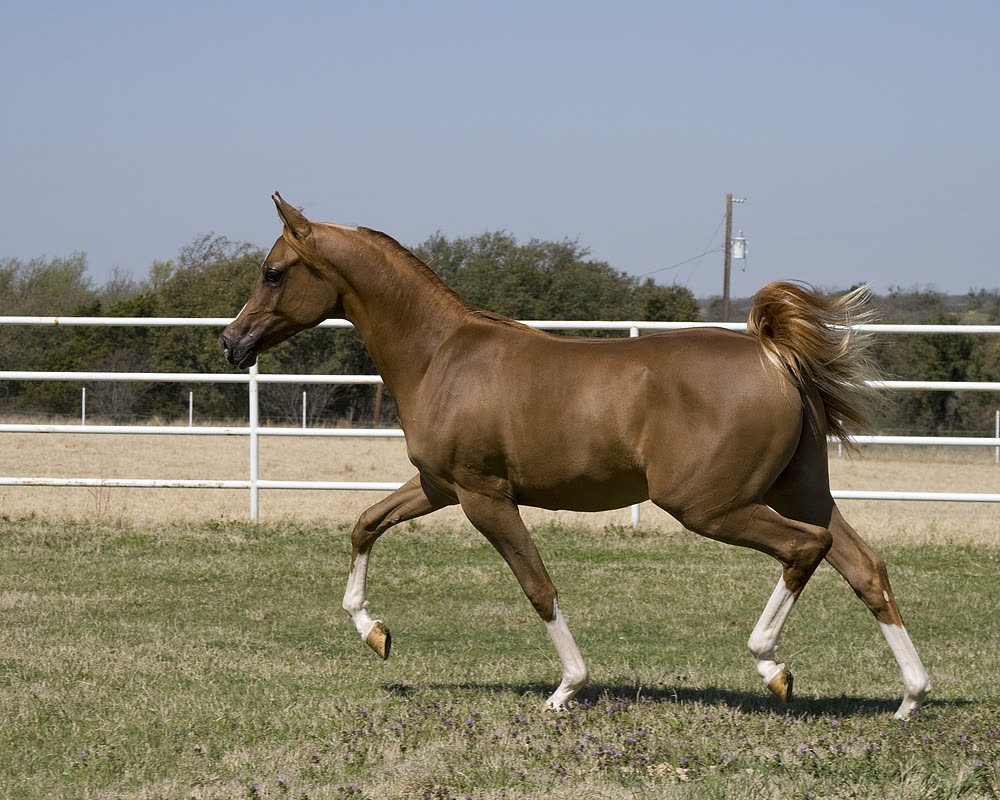
The trot is a two-beat gait in which diagonal legs move together in pairs. The left fore and right hind form one pair, the right fore and left hind the other, and the two pairs take turns on the ground. Each time a pair lands, the horse's body drops slightly and then springs up again, so a rider who takes the full bounce is thrown up out of the saddle.
The rising trot, also called posting, is a way of riding that lets this bounce pass. The rider rises out of the saddle for one beat and sits for the next. The Wikipedia article on the trot notes that when the rising trot is done correctly, it is comfortable for the rider and easy on the horse's back. Which of the two pairs the rise and sit are matched to is what is meant by "which diagonal you are on."
The outside here is the side closer to the arena fence or wall. Away from an arena, the outside of the horse's bend is used as the reference.
Why match the outside foreleg
On the correct diagonal, the rider's weight is in the saddle while the inside hind leg is on the ground and pushing the body forward. The US riding site EquiSearch explains that, in theory, this lets the horse support its own weight and the rider's correctly and stay balanced more easily, especially in corners and tight turns. Wikipedia adds that besides helping the horse's balance, the diagonal is also used to time aids, the signals a rider gives the horse, such as those for the canter.
There is also measured evidence behind this tradition. A study published in PLOS ONE in 2018 by researchers from the Swedish University of Agricultural Sciences and the Royal Veterinary College in the UK fitted 26 horses with inertial sensors. It compared the up-and-down movement of the head and pelvis under 15 conditions, including unridden, sitting trot, rising trot on both diagonals and a light seat with the rider's seat off the saddle.
The sitting trot and the light seat caused no systematic change in movement symmetry. Only the rising trot did. The clearest effect was that the pelvis rose less when the hind leg the rider had been sitting on pushed off from the ground. The researchers attribute this to the downward force created as the rider rises, which counters the horse's push-off. On a circle, riding on the correct diagonal offset the asymmetry that the circle itself creates, so the horses moved more symmetrically. On the wrong diagonal, asymmetry was greatest for every measure. The researchers concluded that this gives a biomechanical explanation for the riding tradition of the "correct diagonal."
Checking by eye and learning by feel
At first, check by eye. During the trot, glance down at the outside shoulder, rise as it moves forward and sit as it comes back. Because diagonal legs move together at the trot, watching the front legs tells you what the hind legs are doing. English-speaking riders remember this with the phrase "rise and fall with the leg on the wall." Keep the look down short. Wikipedia also notes that less experienced riders can check with a quick glance at the shoulder, and that with practice riders learn to recognise the diagonal by feel.
The British riding magazine Pony Magazine suggests these ways to develop the feel.
- After moving into trot, sit for a few strides and then start rising as the outside shoulder moves forward, so that you pick up the correct diagonal from the start.
- Ask someone to watch, say whether you think you are on the correct diagonal without looking down, and then check the answer.
- Close your eyes for a few strides, guess whether the diagonal is correct, then glance down to check. This helps you feel how the horse's legs move underneath you. It is best to do this exercise in a safe arena with an instructor watching.
Changing diagonal and common misunderstandings
To change diagonal, sit for one extra beat and then rise again. The sequence is "up, down, up, down, down, up." After changing, glance at the shoulder again to make sure it is right. When you change the rein and go the other way, inside and outside swap, so the diagonal has to be set again each time.
On a straight path there is no wrong diagonal. How much weight riders give to diagonals also varies by country. Pony Magazine notes that diagonals are considered quite important in the UK, while in many European countries riders do not worry much about which diagonal they are on.
For riders just learning the rising trot, getting the two-beat rhythm of rising and sitting into the body comes before the diagonal. An instructor quoted by EquiSearch says a wrong diagonal will not hurt the horse. At the same time, the study above showed that the rising trot creates an asymmetry in the horse's gait that resembles lameness. If the horse's gait feels uneven on one side during the rising trot, change diagonal and check again, and if the irregularity continues, it is safest to consult a veterinarian.