
Riding
What are riding aids? Legs, reins and weight
· 5 min read
Aids are the signals a rider gives the horse through weight, legs, reins and voice. The key is not to use one aid hard, but to combine several light aids at the right moment and release the pressure as soon as the horse responds.
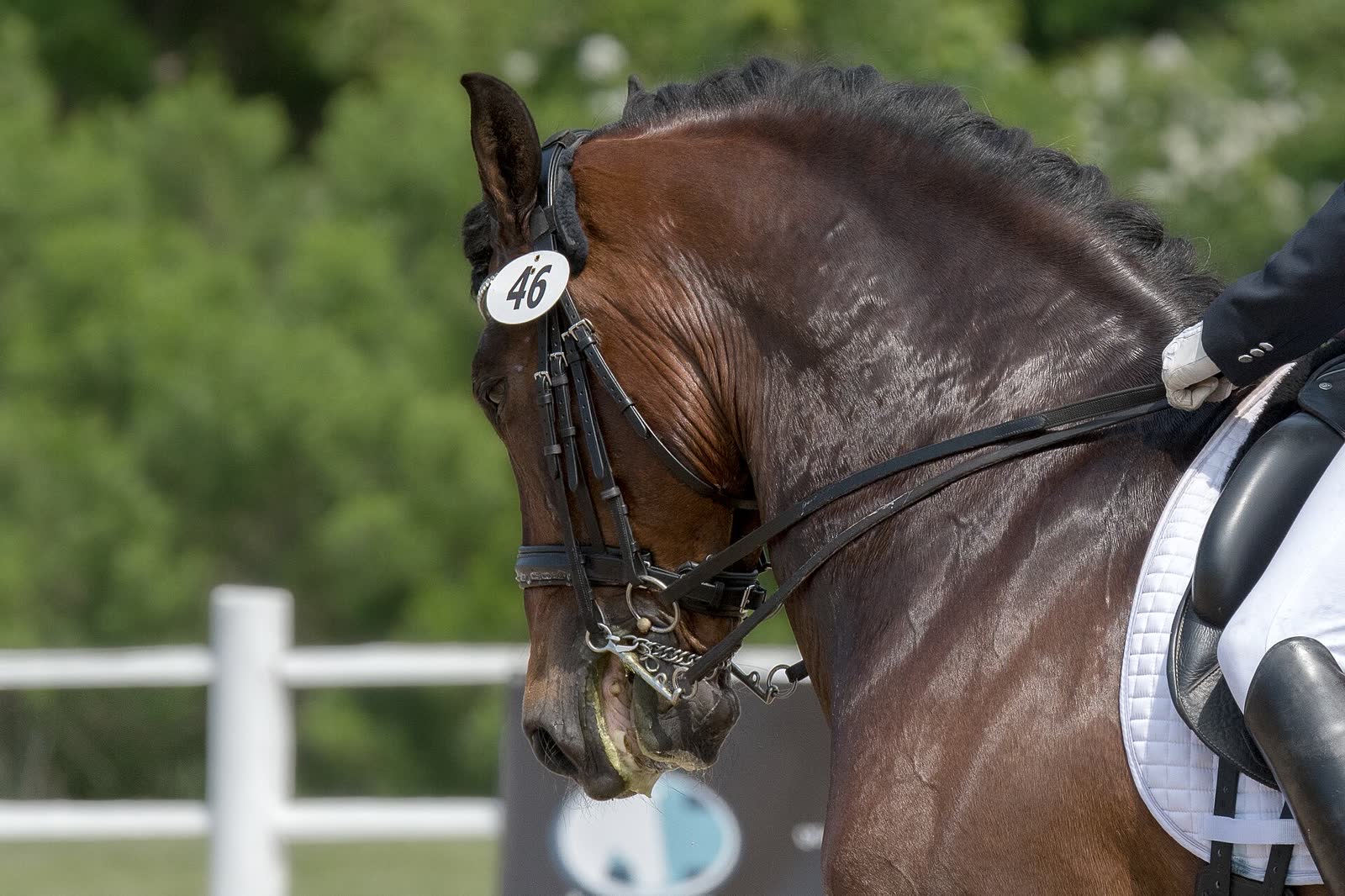
Aids are the signals a rider uses to tell the horse what is wanted. Teaching material from the United States Dressage Federation (USDF) divides them into natural aids, which come from the rider's own body (the seat and weight, legs, hands and voice), and artificial aids, the whip and spurs. The rider uses these signals together to control the horse's posture, gaits and direction. The same material stresses that the response comes not from the rider's strength but from the ability to apply the aids at the right time and with the right intensity.
Natural and artificial aids
According to the British Horse Society manual quoted in the USDF material, whips and spurs reinforce the aids that send the horse forward, and are used only when the legs are not effective. The same material treats the voice as essential when first training a young horse, but notes that if it is used often with older horses, they either come to depend on it or stop responding to it. Audible use of the voice is not allowed in dressage competitions.
American riding instructor Julie Goodnight adds the eyes, the breathing and the mind to the four traditional natural aids, and teaches seven. The rider looks where they want to go, breathes in to ask for more speed and breathes out to slow down. She explains that no single aid is a cue on its own: a rider does not stop by pulling on the reins or go by kicking.
Weight aids: signals through the seat bones
The USDF material describes three ways to use weight.
- More weight on both seat bones (the bones of the seat that rest on the saddle): used in halts, half-halts (brief signals that rebalance the horse or adjust its pace) and all transitions. Combined with forward-driving leg aids, it makes the horse step further under its body with the hind legs.
- More weight on one seat bone: backs up the rein and leg aids whenever the horse is flexed or bent. The hip and knee on that side drop slightly, and for a well-schooled horse this is a signal to turn and the most important aid. Pushing down hard on the inside stirrup should be avoided, because it can make the weight slide to the wrong side.
- Easing the weight on the seat bones: used on young horses, when loosening the horse up and in the early stages of teaching the rein-back. The seat stays in the saddle while a little more weight goes onto the thighs and stirrups and the upper body tips slightly forward.
The same material lists leaning back, tensing the seat muscles and drawing up the knee and thigh as incorrect use of the weight aids. Goodnight also says the seat comes before the reins when stopping. When the rider relaxes the pelvis, sinks the seat bones into the saddle and keeps the elbows close to the hips, the pressure the horse feels in its mouth comes from the rider's whole body rather than the hands.
Leg aids: forward, sideways and guarding
In the USDF material, leg aids tell the horse to start moving and keep the movement going, so they always have a driving action. The forward-driving leg is applied just behind the girth, with the heel directly below the hip, by briefly tightening the calf muscles. It works best when timed with the moment the hind foot on the same side leaves the ground. The legs should never stay clamped to the horse's sides.
The sideways-pushing leg sits about 10cm further back than normal and is never drawn upwards. The other leg, in about the same place, plays a less active "guarding" role and stops the hindquarters escaping sideways. Goodnight describes three leg positions: forward, middle and back. The forward leg moves the shoulder, the middle leg moves the rib cage and the back leg moves the hip away from the pressure. An old saying she quotes holds that the inside leg gives impulsion and the outside leg gives direction.
Rein aids: give and take, not pull
Wikipedia describes reins as carrying subtle cues, known as rein aids, that ask for a turn, a slower speed, a halt or a step backwards. The USDF material divides rein aids into yielding, asking, non-yielding, regulating and opening reins, and says each must be used together with leg and weight aids.
An asking rein means briefly closing the fingers or, for a stronger effect, turning the hand slightly inwards from the wrist. If the horse does not respond at once, it must never turn into pulling; the hand yields and asks again. A non-yielding rein means the hands close firmly without changing position, but they do not act backwards or hold for too long. The outside rein allows only as much bend in the neck as the inside rein has asked for while preventing too much bend, and the opening rein shows the direction in turns and is especially useful on young horses. The USDF material notes that most riders tend to do too much with the reins and too little with the legs and weight.
A common misconception: the stronger the aid, the better
According to the USDF material, the intensity of the aids depends on the horse's sensitivity, its stage of training and the movement being asked for, and the aids should always start gently. If strong aids were needed, the rider should return to light aids afterwards so the horse does not become dull to them. As training progresses the aids grow smaller, until an onlooker can barely see them. To ride this way, the rider first has to be relaxed and sitting correctly.
The training principles of the International Society for Equitation Science (ISES) point the same way. Pressure from the bit, leg, spur or whip should be removed as soon as the horse begins the correct response, and delays in reinforcement are both ineffective and unethical. ISES recommends giving a light signal before the pressure, so the horse learns to respond to the light signal alone. It warns that misusing these principles can lead to serious behaviour problems such as aggression, escape and apathy, and can harm the horse's welfare.
Sources
- United States Dressage Federation (USDF), Rider's Coordination of the Aids
- United States Dressage Federation (USDF), The Four Rein Aids
- Julie Goodnight, Understand and Ride Using the Natural Aids (2007, hosted by University of Florida IFAS)
- Wikipedia (English), Rein
- International Society for Equitation Science (ISES), ISES Training Principles