
Riding
Olympic equestrian sport: dressage, eventing and show jumping
· 4 min read
Olympic equestrian sport today has three disciplines, dressage, eventing and show jumping, each with individual and team medals. It is the only Olympic sport in which animals take part, and men and women compete against each other in the same events.
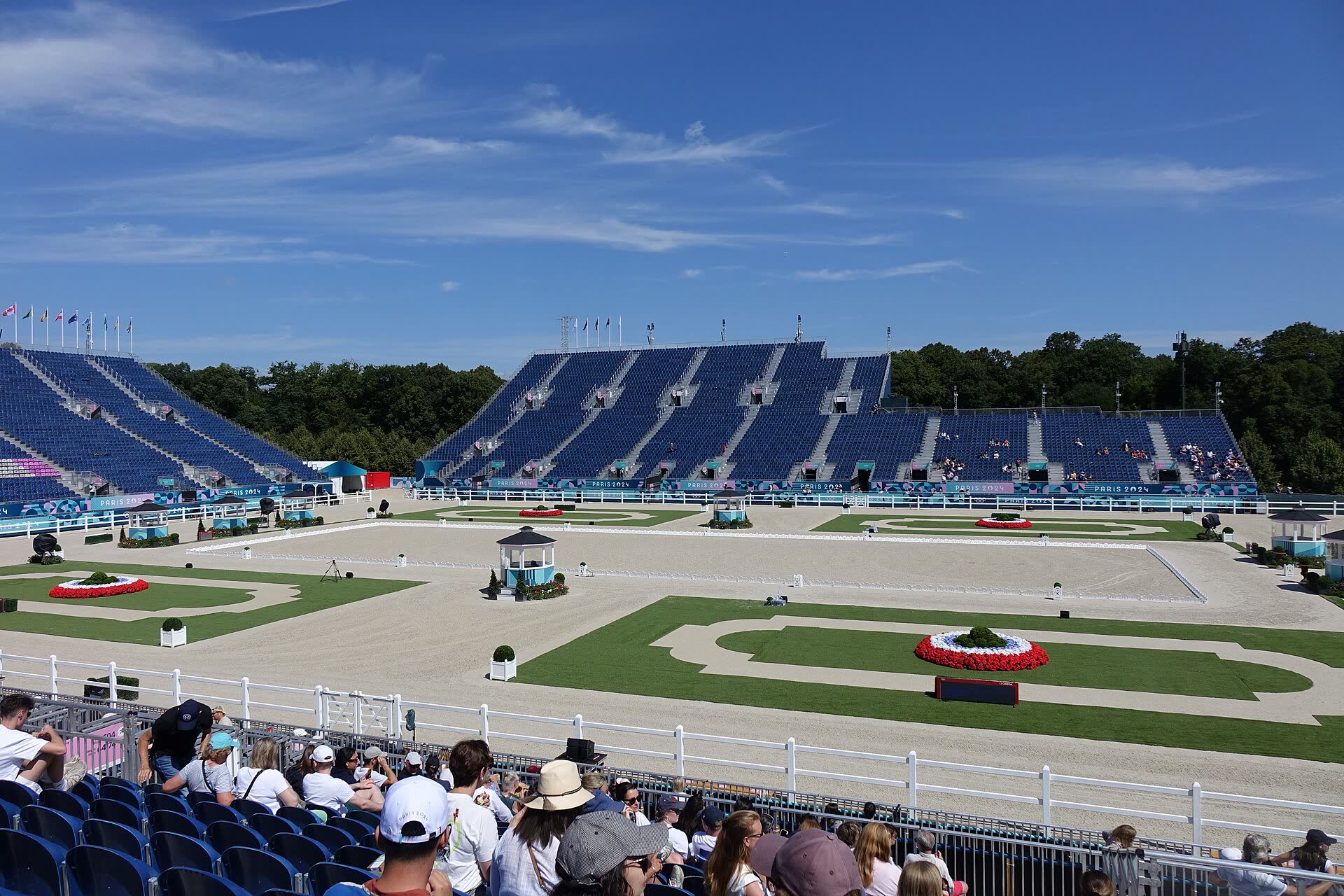
Olympic equestrian sport is contested in three disciplines: dressage, eventing and show jumping. Each has an individual and a team competition, so there are six gold medals in total. According to Wikipedia, it is the only Olympic sport that involves animals, and the horses are regarded as athletes as much as the riders. It also differs from most sports in that men and women are not separated and compete in the same events. International equestrian sport is governed by the International Federation for Equestrian Sports (FEI).
From Paris 1900 to the three disciplines of today
Equestrian sport first appeared at the 1900 Paris Games. Five events were held: individual jumping, high jump, long jump, hacks and hunter combined, and mail coach driving. In the high jump two horses cleared 1.85 m and shared first place, and the winning long jump was 6.10 m.
Equestrian sport was dropped from the 1904 Games. Count Clarence von Rosen, who was in charge of the Swedish king's horses, proposed adding dressage, eventing and show jumping, and the 1906 IOC Congress agreed. The three disciplines were first held at the 1912 Stockholm Games and have been part of every Summer Olympics since. The first Olympics held under FEI authority were the 1924 Games.
The early competitions looked different from today's. In 1912, dressage horses had to jump four obstacles of up to 1.1 m and pass an obedience test near unfamiliar objects, in addition to the test on the flat. The freestyle to music, which now decides the individual medals, was first introduced at the 1996 Games.
Some events no longer exist. Polo was held five times between 1900 and 1936, and vaulting, gymnastic movements performed on a moving horse, was held only once, at the 1920 Antwerp Games.
From officers only to men and women competing together
Until the 1952 Games, only commissioned officers and so-called "gentlemen" could compete in Olympic equestrian events. This excluded women and soldiers who were not officers. From the 1952 Helsinki Games all men could compete, and women entered dressage. Women first competed in show jumping in 1956 and in eventing in 1964. Teams have no rules on the mix of men and women, so each country can choose its best riders regardless of gender.
How each discipline decides its medals
At the 2024 Paris Games, 200 riders from 49 nations competed at the Palace of Versailles. The quota was 75 places for show jumping, 65 for eventing and 60 for dressage, and every team was made up of three horse-and-rider pairs.
- Dressage: the Grand Prix is the qualifier for both the team and individual competitions. The top eight teams contest the team medals in the Grand Prix Special, where the qualifier scores are wiped and only the Special counts. Individual medals are decided by the 18 qualified riders in the Grand Prix Freestyle, a test each rider designs and rides to music.
- Eventing: each rider uses the same horse for dressage, cross-country and show jumping, and the penalties are added together. Individual and team results are scored together, and after the first jumping round the top 25 riders jump a second round to decide the individual medals.
- Show jumping: individual and team competitions are held separately. In the individual event the top 30 from the qualifier reach the final, and in the team event the top 10 teams from the qualifier jump the final over a different course. Ties for a medal are settled by a jump-off.
In team eventing, an eliminated rider adds penalties to the team score: 100 points for elimination in dressage or show jumping and 200 points for elimination on cross-country, and bringing in a reserve rider during the competition adds 20 points. In Paris, Germany won four gold medals and Great Britain two, so the two nations took all six.
What changes when the athletes include horses
Horses must go through quarantine, the checking and isolation of imported animals to stop disease spreading, and this has twice moved the equestrian events away from the host city. At the 1956 Melbourne Games, Australia's strict quarantine rules meant the equestrian events were held in Stockholm, Sweden. For the 2008 Beijing Games, concern about equine disease in Beijing led to the events being held in Sha Tin, Hong Kong, which had high quarantine standards and existing facilities.
Horses are drug-tested just as riders are. At the 2024 Paris Games, the Belgian eventing team, which had finished fourth, was disqualified after a banned substance was found in one of its horses.
The equestrian events of the 2028 Los Angeles Games are scheduled for Santa Anita Park in Arcadia, California. The format of three disciplines, six individual and team events and three pairs per team stays the same, and the host nation, the United States, receives one team place in each discipline.