
Riding
Naming the tack: saddle, bridle and bit
· 5 min read
The equipment a horse wears is called tack, and its core is the saddle the rider sits on and the bridle on the horse's head. A bridle is made up of the bit, the reins and the headstall, and the saddle is held on the horse by the girth.
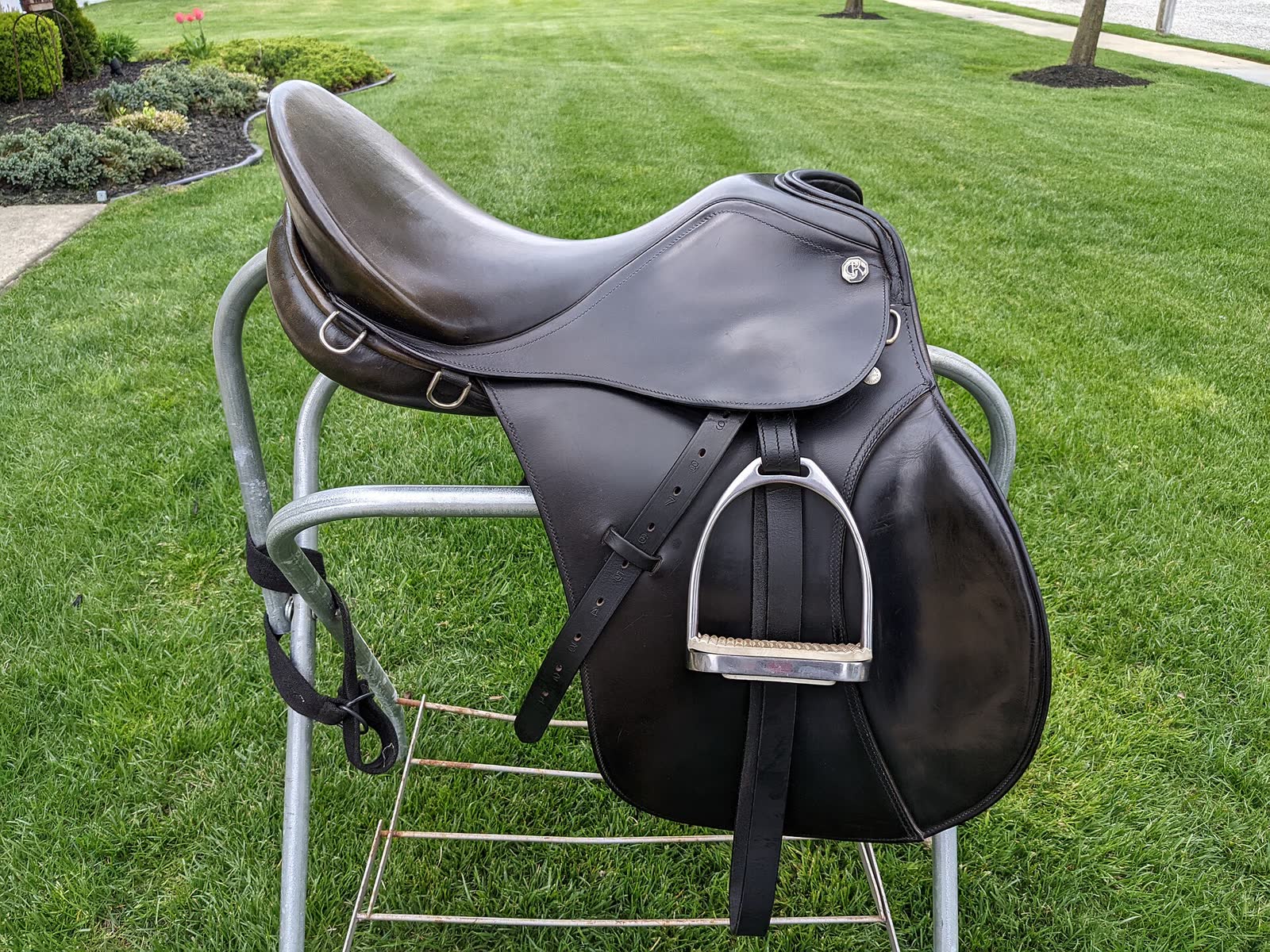
All the equipment a horse wears is called tack. In riding, the core of it is the saddle the rider sits on and the bridle on the horse's head. The bridle is made up of the bit the horse carries in its mouth, the reins that run from the bit to the rider's hands, and the headstall that holds the bit in place. The saddle is held on by the girth around the horse's belly, and the rider's feet rest in the stirrups hanging on each side. The UK animal welfare charity Blue Cross explains that ill-fitting or damaged tack makes a horse uncomfortable, can cause behaviour problems under saddle and can lead to serious injury. Knowing the names of the parts is what lets you check that each one is fitted properly.
The bridle: headstall, bit and reins
The University of Missouri Extension guide says every bridle has three basic parts: the bit, the reins and the headstall. The bit is the main means of communication between rider and horse. The reins move the bit and also serve as a secondary means of communication, and the headstall holds the bit in place and may put pressure on the poll, just behind the ears. On an English bridle the headstall is divided into several straps.
- Crownpiece: the main strap that goes over the poll just behind the ears and holds all the other parts in place.
- Cheekpieces: they run down each side of the face from the crownpiece and attach to the bit rings. Their length sets the height of the bit.
- Browband: it crosses the forehead and stops the bridle slipping back onto the neck.
- Throatlatch: it runs from below the ears under the throat and stops the bridle coming off if the horse rubs its head.
- Noseband: it goes around the nose and is used to keep the mouth closed or to attach other equipment such as a martingale. An English noseband with its own headstall, which allows its height to be adjusted precisely, is called a cavesson.
The bit rests on the bars, the toothless gums between the front teeth and the back teeth. Bits fall into two broad groups: snaffles, which work by direct pressure, and curbs, which work by leverage. At the upper levels of dressage, riders use a double bridle, with a small snaffle (the bradoon) and a curb bit in the mouth at the same time and four reins in the hands. Headgear that controls the horse through pressure on the nose rather than a bit is called a hackamore. A halter, which looks similar to a bridle, has only a noseband and headstall and no bit, and is used for leading or tying a horse.
The saddle: from the tree to the stirrups
An English saddle is built on a frame called the tree. The tree is made of wood or a similar synthetic material, fitted with metal parts such as the stirrup bars on which the stirrups hang, and then covered with leather or synthetic material.
- Seat: the lowest point of the saddle's top line, where the rider's seat bones rest. A deeper seat gives the rider more security.
- Pommel and cantle: the raised front and back of the saddle. The pommel leaves clearance over the horse's withers, the high point above the shoulders.
- Panels: the cushions on the underside, filled with wool, foam or air pockets. There is one on each side of the spine.
- Gullet: the channel between the two panels, which keeps the saddle off the spine.
- Flap: the large piece of leather between the rider's leg and the girth buckles. Its shape and length follow the rider's leg position, so they differ between disciplines.
- Billets: the straps that hang down under the saddle, to which the girth is buckled. There are usually three.
- Stirrups and stirrup leathers: the stirrup iron the foot rests in, usually made of stainless steel, hangs from the stirrup bar on a stirrup leather. The stirrup bar is usually kept open so that if a rider falls with a foot caught, the leather can come off the saddle.
A saddle pad goes under the saddle to keep its underside clean and reduce slipping. In fast disciplines that involve jumping, such as show jumping and eventing, a breastplate is also used to stop the saddle sliding back or sideways.
How to check the fit
Blue Cross and the University of Missouri guide give these checks.
- Browband: leave two fingers' width of room so it does not pinch the ears.
- Noseband (cavesson): two fingers should fit under it. The Missouri guide says it should sit about 2 inches (about 5 cm) below the point of the cheekbone.
- Bit height: the bit should make one small wrinkle at the corner of the mouth. Too low, and it presses on the tongue and knocks the front teeth; too high, and it pinches the corners of the mouth.
- Bit width: Blue Cross recommends about 1 cm of clearance at each side of the mouth. Bits come in sizes from 9 to 15 cm in 0.5 cm steps.
- Throatlatch: at least three fingers should fit between the throat and the strap. Too tight, and it restricts breathing.
- Saddle: it should sit level, not tipping forwards or backwards, and no part of it should touch the spine or withers. Blue Cross puts the gullet width at about 6.5 cm and says there should be a similar gap between the front of the saddle and the withers. The back of the saddle should not reach beyond the start of the last rib.
- Girth: it should sit about a hand's width behind the elbows. On a saddle with three billets, buckle it to the first and third on each side.
Common misconceptions and points to watch
Riders sometimes try to make up for a poorly fitting saddle with a thick pad, but Blue Cross says pads should not be used this way. A pad that is too thick or creased can change the fit of a saddle that otherwise fits well, and a pad not pulled up into the gullet puts pressure on the withers and spine. When a horse's shape changes through weight gain or muscle development, the saddle fit should be checked again, and Blue Cross recommends leaving fitting to a qualified saddle fitter.
The idea that a bitless hackamore is always gentler is also a misconception. A horse's face has many nerve endings and is very sensitive, and misuse can cause swelling and scraping on the nose and, in extreme cases, damage to bone and cartilage. The same goes for bits: in rough hands even the mildest bit can hurt a horse. Blue Cross warns that putting a stronger bit on a horse so that a less experienced rider can hold it can make the horse go sideways, go backwards or rear.
The order of tacking up matters too. The Missouri guide advises untying a tied horse first and putting the bridle on before the saddle. A tied horse may suddenly pull back and break loose, and with the bridle on first, a horse that gets away will at least not be dragging a saddle behind it.