
Horse science
Why Horses Cannot Vomit
· 4 min read
The muscular ring where the oesophagus enters a horse's stomach closes like a strong one-way valve, and the stomach sits deep inside the rib cage, so horses cannot vomit. When gas or fluid builds up in the stomach, it can rupture.
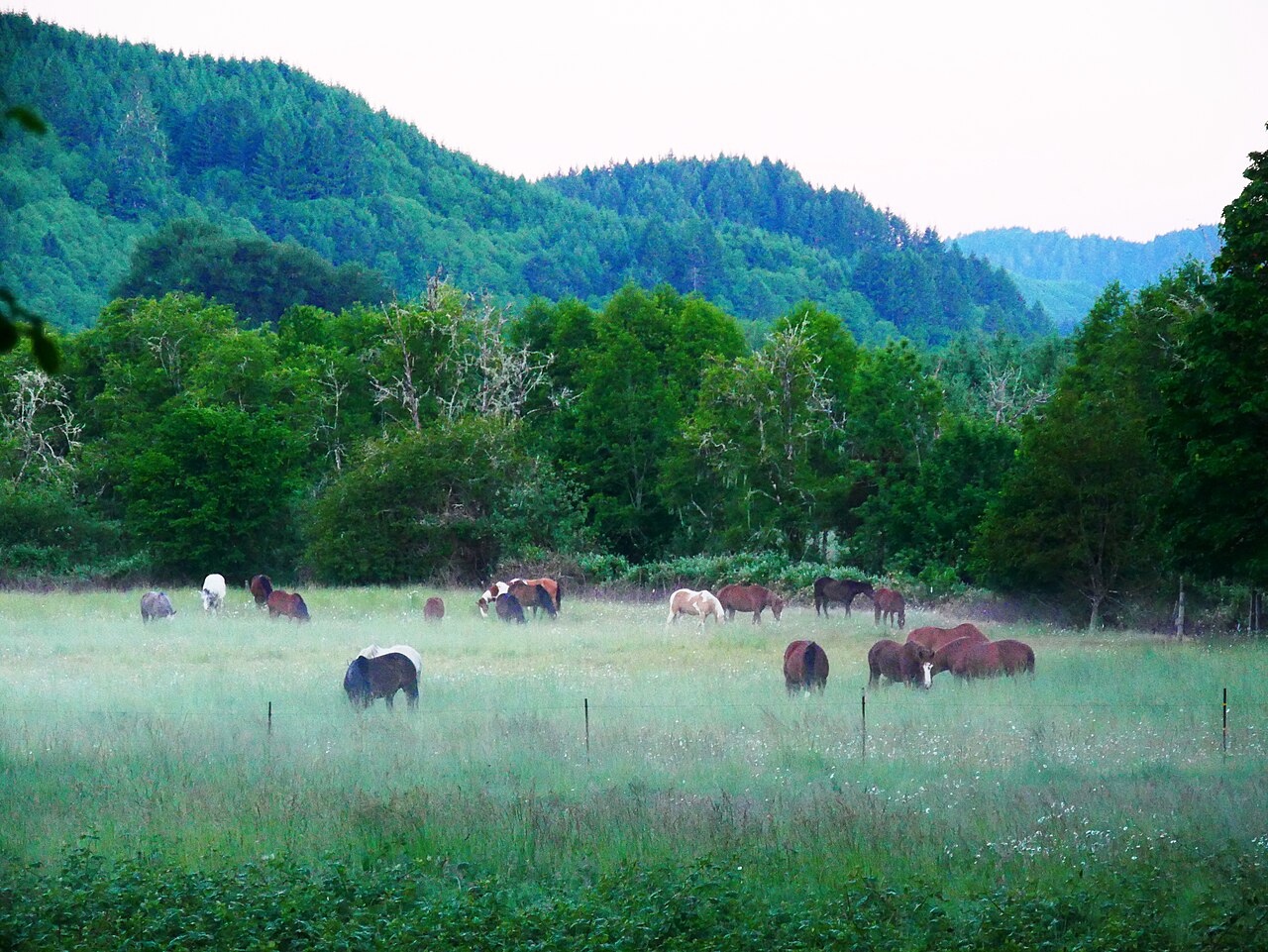
Horses, for practical purposes, cannot vomit. The muscular ring where the oesophagus enters the stomach closes far more tightly than in other animals. Together with the angle at which the oesophagus meets the stomach, the stomach's position deep inside the rib cage and a weak vomiting reflex, this means that food, once swallowed, does not come back up. The design keeps food moving in one direction, but it has a weakness: when too much gas or fluid collects in the stomach, it has no way out.
Vomiting takes many actions at once
Vomiting only happens when several reflexes work together in a set order. According to EQUUS, a person about to vomit takes a deep breath, the vocal cords close, the larynx rises and the soft palate moves to seal off the airway. The diaphragm then contracts downward, which releases pressure on the lower oesophagus and on the sphincter where it enters the stomach. Next, the abdominal muscles contract suddenly and squeeze the stomach, and its contents leave along the open path. The brain's vomiting centre controls this sequence, and it happens involuntarily.
Veterinary physiology notes from the University of Minnesota also describe the stomach, abdominal muscles and diaphragm contracting together while the lower oesophageal sphincter opens. In other words, something must squeeze the stomach at the same moment its exit opens. In horses, both are difficult.
Four "locks" in the horse's body
EQUUS lists four differences that keep horses from vomiting.
- A strong sphincter: The muscles of the horse's lower oesophageal sphincter are much stronger than in other animals, so backward pressure from the stomach can hardly open it.
- The entry angle: The horse's oesophagus joins the stomach at a lower angle than in many animals. When the stomach swells, for example with gas, it presses on the valve and holds it even more tightly shut.
- The stomach's position: The horse's stomach lies deep within the rib cage, where the abdominal muscles cannot easily squeeze it. The Merck Veterinary Manual likewise places the stomach on the left side of the abdomen, beneath the rib cage.
- A weak vomiting reflex: The nerve pathways that trigger vomiting in other animals are poorly developed in horses, and may not exist at all.
Ohio State University adds two more points. The oesophagus, about 1.4 m long, moves food only towards the stomach through waves of muscle contraction (peristalsis). The cardiac sphincter at the stomach entrance is a one-way valve that stops food and gas already in the stomach from returning to the oesophagus. In the throat, the soft palate closes like a trap, so food and water cannot return to the mouth. Anything that does come back up leaves through the nostrils, not the mouth.
Why horses evolved this way is not certain. EQUUS describes one theory. When a horse gallops, its intestines move back and forth like a piston and pound against the stomach, a jolt that would make other animals vomit. A strong sphincter may have developed so that horses would not vomit while running from predators.
The risk of being unable to vomit
Being unable to vomit means the horse has no way to empty its stomach by itself. The Merck Veterinary Manual explains that the junction between the end of the oesophagus and the stomach entrance is a one-way valve that lets gas and fluid in but not out. When gas and fluid cannot move normally down through the small intestine, the stomach can stretch severely and rupture. The University of Minnesota notes also say that, because of the strong sphincter, the stomach often ruptures before a horse can vomit.
For this reason, when a vet examines a horse with colic (abdominal pain), they pass a tube through the nose into the stomach (a nasogastric tube) to check for trapped fluid. According to the Merck Veterinary Manual, passing this tube can save the horse's life. Draining the fluid eases the pain caused by a stretched stomach and prevents rupture. Healthy horses usually yield less than 1 L of fluid, and more than 4 L is listed as one sign that surgery may be needed. In veterinary terms, stomach contents that come out through the tube are called "reflux", not vomit.
Feed coming from the nostrils: choke
If saliva mixed with feed, or water, runs from a horse's nostrils, the horse has not vomited. Its oesophagus may be blocked, a condition called choke. According to Ohio State University, a horse with choke can still breathe but cannot eat or drink, so it is an emergency and a vet should be called straight away. The same source recommends these steps to lower the risk.
- Keep clean water available at all times.
- Arrange regular dental care.
- Discourage the horse from bolting its feed, especially pelleted feed.
A horse cannot empty its stomach or oesophagus by itself when something goes wrong. If you suspect colic or choke, do not try to fix it yourself; contact a vet at once.