
Horse science
Where Is a Horse's Height Measured?
· 4 min read
A horse's height is measured not to the head but from the ground to the highest point of the withers, the ridge between the shoulder blades. The horse stands square on level ground and a levelled measuring stick is used. The FEI treats horses up to 148 cm without shoes as ponies.
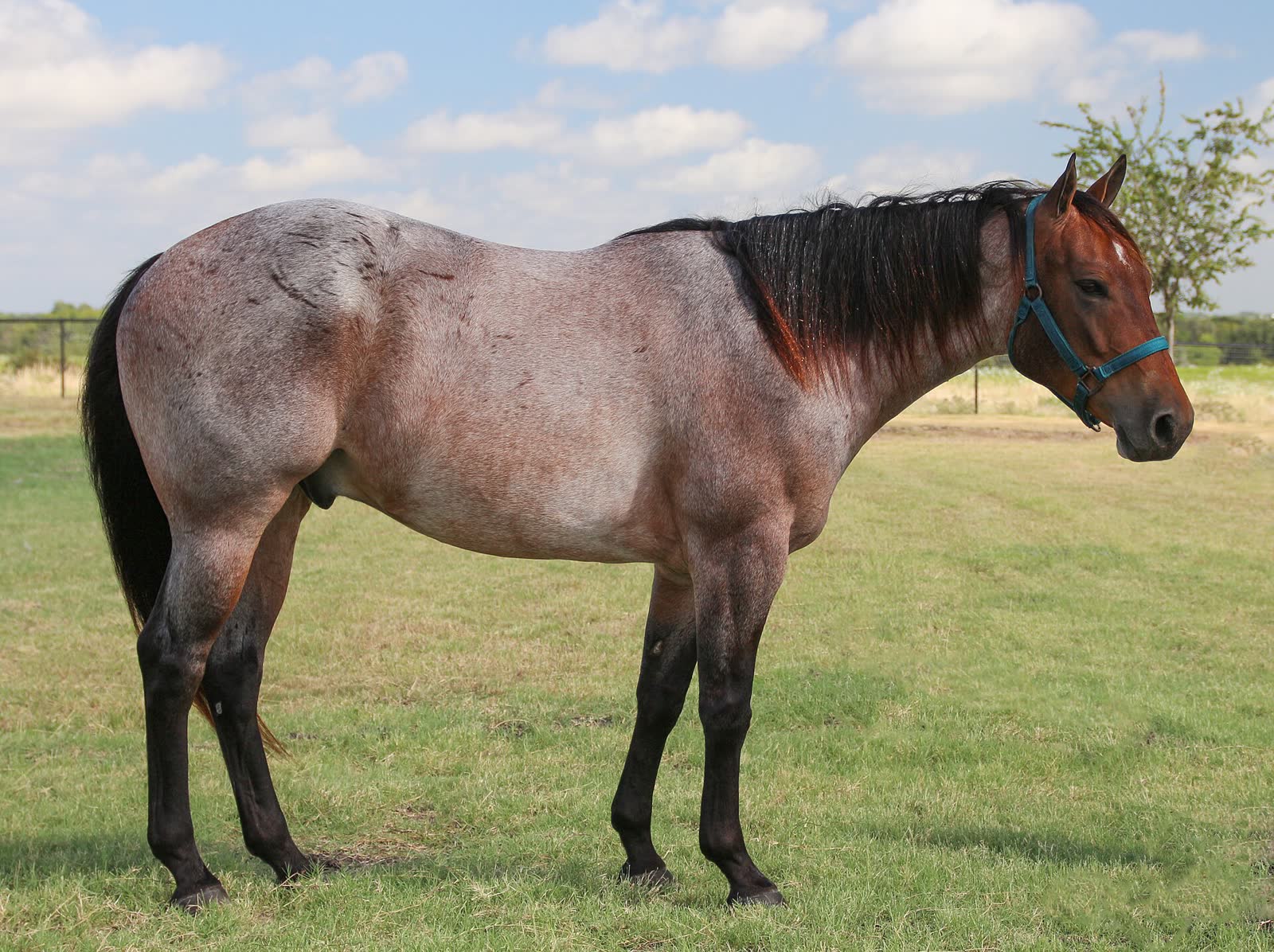
A horse's height is not measured to the top of its head. It is the vertical distance from the ground to the highest point of the withers, the ridge that rises between the two shoulder blades. The head and neck move up and down all the time, but the withers do not move relative to the ground, so horses and dogs are measured there. Other animals use other reference points: cattle, for example, are often measured to the top of the hips.
What the withers are
The withers are a ridge formed by the spinous processes, the bony projections that rise from roughly the third to the eleventh thoracic vertebrae, the chest section of the spine. Most horses have 18 thoracic vertebrae, and the spinous processes at the withers are unusually long, sometimes more than 30 cm. Seen from the side, the back rises once just behind the end of the mane and then drops to where the saddle sits.
Official measurement uses the highest point of the skeleton that does not change in height. If necessary, the spinous process of the fifth thoracic vertebra is found by touch and marked. Some miniature horse breeds, however, are measured at the base of the last hairs of the mane rather than at the withers.
How to measure: level ground, a square stance, a level stick
The youth horse record book guide from the University of Florida IFAS Department of Animal Sciences describes the procedure as follows.
- Stand the horse on a level, solid surface so that neither the horse nor the stick sinks into the ground. If concrete or asphalt is not available, a board such as plywood can be used.
- Keep the horse relaxed, with the head in its normal position and never lower than horizontal. The horse should stand square on all four legs.
- Hold the upright of the horse measuring stick vertical to the ground and the arm that rests on the withers horizontal. Seat the arm on the highest point of the withers without pressing down.
- If the horse wears shoes or pads, their thickness may be subtracted from the recorded height.
Without a measuring stick, a tape measure, a straight edge and levels can be used instead. This method has more room for error and is not accepted as an official measurement, but it gives a fair idea of the horse's height. Rules on shoes differ between bodies. In competitions run by the Fédération Équestre Internationale (FEI) and the United States Equestrian Federation (USEF), a horse may be measured with shoes on or off. The Joint Measurement Board (JMB) in the United Kingdom requires the shoes to be removed and the hooves prepared as if for shoeing before measurement.
Hands, centimetres and the pony limit
English-speaking countries such as the United Kingdom, the United States, Ireland, Canada and Australia describe height in hands. The unit came from the breadth of a human hand. In England it was fixed at four inches by a statute of Henry VIII in 1540, and today it equals 10.16 cm. The notation is unusual: the number after the point is not a decimal but a count of inches. So 15.2 hands means 15 hands and 2 inches, or 62 inches. Because a hand is four inches, there is no such height as 15.4 hands; 64 inches is 16.0 hands.
Continental Europe and FEI international competition use metric units. The FEI sets the maximum height at the withers for a pony at 148 cm without shoes, or 149 cm with shoes. A reading of 148.1 to 148.9 cm is rounded down to 148.0 cm. To enter FEI pony competitions, a pony must pass an official measurement and receive a certificate. Ponies aged eight or older receive a lifetime certificate, while ponies aged six to eight receive an interim certificate valid for 15 months. A pony aged six to eight that does not exceed 140 cm without shoes receives a lifetime certificate.
For reference, the Wikipedia article on withers gives the average height of a Thoroughbred as 163 cm (16.0 hands) and puts ponies at up to 147 cm (14.2 hands).
How the shape of the withers matters in riding
Besides being the place where height is measured, the withers are an important attachment point for the muscles of the torso. The spinous processes there anchor the muscles that support the shoulder and neck. Horses have no collarbone, so the shoulder can rotate backwards freely. If the bones of the withers are long from front to back, the shoulder can move further back and the stride becomes longer. This shoulder movement is also needed when a horse lifts and folds its forelegs over a jump.
When judging conformation, well-defined withers of medium height are generally preferred. High withers make it hard to fit a saddle and often go with a narrow chest. Low, rounded withers, on the other hand, provide no ridge to hold the saddle, so it tends to slip. Check whether the saddle touches or presses on the withers, and if it does not seem to fit, it is safer to consult a saddle fitter or a veterinarian.