
Horse science
What Is a Warmblood?
· 4 min read
A warmblood is not a single breed but a group of middle-weight horses bred mainly in Europe for equestrian sport. Their registries keep open studbooks and select breeding stock on conformation, movement and performance tests rather than pedigree alone.
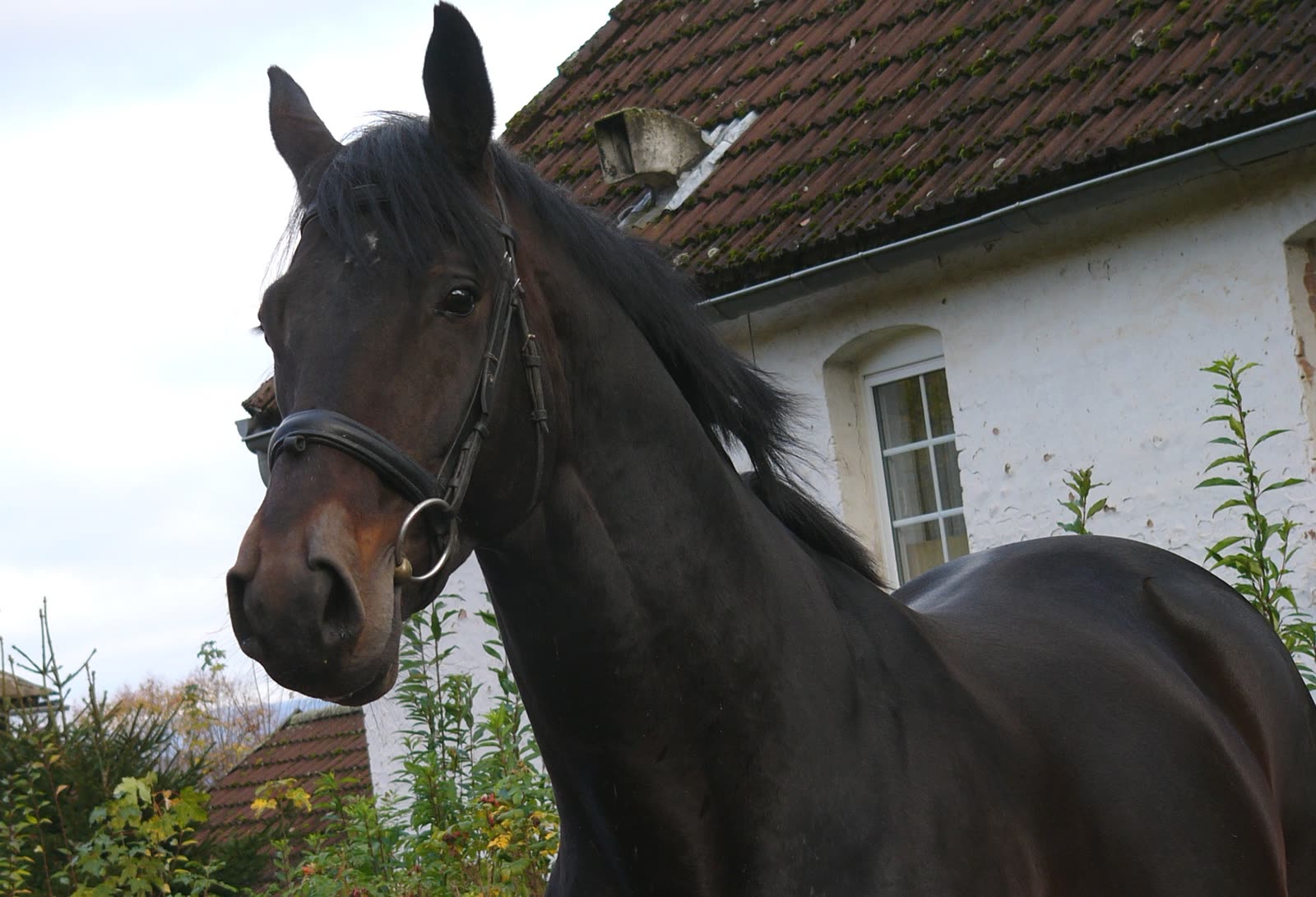
Warmblood is not the name of a single breed. It is a collective term for middle-weight horse types and breeds that developed mainly in Europe. The registries that manage these horses share three features: they keep their studbooks open to other populations, they choose breeding stock through inspection, and their breeding goal is horses for equestrian sport. Each registry has a slightly different focus, but most centre on show jumping and dressage, and many also include combined driving and eventing.
What the name means: between cold blood and hot blood
The name comes from the idea of mixing cold-blooded and hot-blooded breeds. Cold blood refers to heavy-boned, even-tempered draught horses from northern Europe, such as the Shire and the Clydesdale. "Cold" describes the climate they came from. It does not mean a cold-blooded animal. Hot blood refers to high-spirited horses of Arabian or Thoroughbred lines. "Hot" refers both to their temperament and to the hot regions of the Middle East and North Africa where they originated.
Warmblood is sometimes used for a first-generation cross between a hot-blooded and a cold-blooded horse. Today, however, it usually means horses bred over many generations to perform well in show jumping, dressage, eventing and combined driving. "Sport horse" is a newer term with a similar meaning. Older registries tend to keep the word warmblood, while newer ones tend to use sport horse.
Selected on ability rather than pedigree
Breeds such as the Thoroughbred, Arabian, Percheron and Morgan have closed studbooks. A foal can only be registered if both parents are registered in that breed. Most warmblood registries take the opposite approach. They accept breeding stock from other similar populations to keep improving their own, and they do not see their horses as a separate "breed". Most recognise breeding stock from member registries of the World Breeding Federation for Sport Horses (WBFSH), which is affiliated with the International Equestrian Federation (FEI). The Trakehner is an exception and is considered a true breed with a closed studbook, and the Hanoverian, Holsteiner and Selle Français studbooks are somewhat less open than others.
The way breeding stock is chosen is called studbook selection. Judges assess conformation and movement to remove horses unsuitable for breeding, and today a performance test is usually required as well, particularly for stallions. The Hanoverian is a good example.
- Each year seven regional clubs nominate 700 two-year-old colts as stallion candidates, and only 100 of them go on to the main licensing in Verden, Germany, in October.
- A veterinary exam must find them free of heritable conditions such as osteochondrosis, a joint disease in which bone and cartilage do not develop properly. Their gaits and legs are then checked for straightness on a hard surface.
- On the second day their gaits are judged for dressage and their jumping ability is assessed. On the third day about half receive a temporary breeding licence. Most of the rest are gelded and become riding horses.
- Mares are inspected for conformation and gaits at three years old, and only those entered in the studbook can have registered foals.
Breeding goals that change with the times
Warmblood standards for conformation are not meant to preserve an ancestral type but to meet the needs of the time. The Oldenburg is a typical case. In the late 19th century the aim was a heavy but elegant, high-stepping carriage horse. In the early 20th century it was a heavier, stronger farm and artillery horse, and since 1950 it has been a modern sport horse.
The Hanoverian followed a similar path. In 1735 George II, King of England and Elector of Hanover, founded the State Stud at Celle to breed horses for farm work, harness and the cavalry, and by the end of the 18th century the Hanoverian had become a high-class carriage horse. After the First World War it was bred as a farm horse that could still be ridden and driven. After the Second World War Thoroughbreds were brought in to turn it into a sport horse. This was also when warmbloods became popular, as mechanisation made farm horses unnecessary and recreational riding spread in the West. The older types survive as "heavy warmbloods", preserved by separate organisations.
Well-known breeds and common misconceptions
Most warmbloods were developed in continental Europe, especially Germany. Well-known German examples are the Hanoverian, Holsteiner, Oldenburg and Trakehner. Others include the French Selle Français and the Belgian, Dutch and Swedish Warmbloods. Registries outside Europe include the American Warmblood, the Brazilian Sport Horse and the Irish Sport Horse. Many of these breeds do not have "warmblood" in their name and are named after the region where they first developed.
The Trakehner began in the early 1730s at the state stud in Trakehnen, East Prussia. It is considered the lightest and most refined warmblood and is used to improve other warmblood breeds. Many horses were lost during the flight west at the end of the Second World War, and after the war only about 600 broodmares and 50 stallions remained in West Germany. The Hanoverian has no height requirement but usually stands 160 to 175 cm.
There are a few common misconceptions. The first is that the warmblood is one breed. In fact the term covers horses from many registries with similar breeding methods and goals. The second is that the name means a horse with warmer blood. Cold blood, hot blood and warmblood describe temperament and ancestry, not body temperature. The third is the idea that warmbloods descended from a native "Forest Horse" of continental Europe. This theory was once widely known, but DNA studies of early horses have disproved it.