
Horse science
Jeju Horse and Halla Horse: What Is the Difference?
· 4 min read
The Jeju horse is a small native horse bred on Jeju Island for centuries, while the Halla horse comes from crossing Jeju horses with Thoroughbreds. A genome study found the Halla horse to be closer to the Thoroughbred than to the Jeju horse.
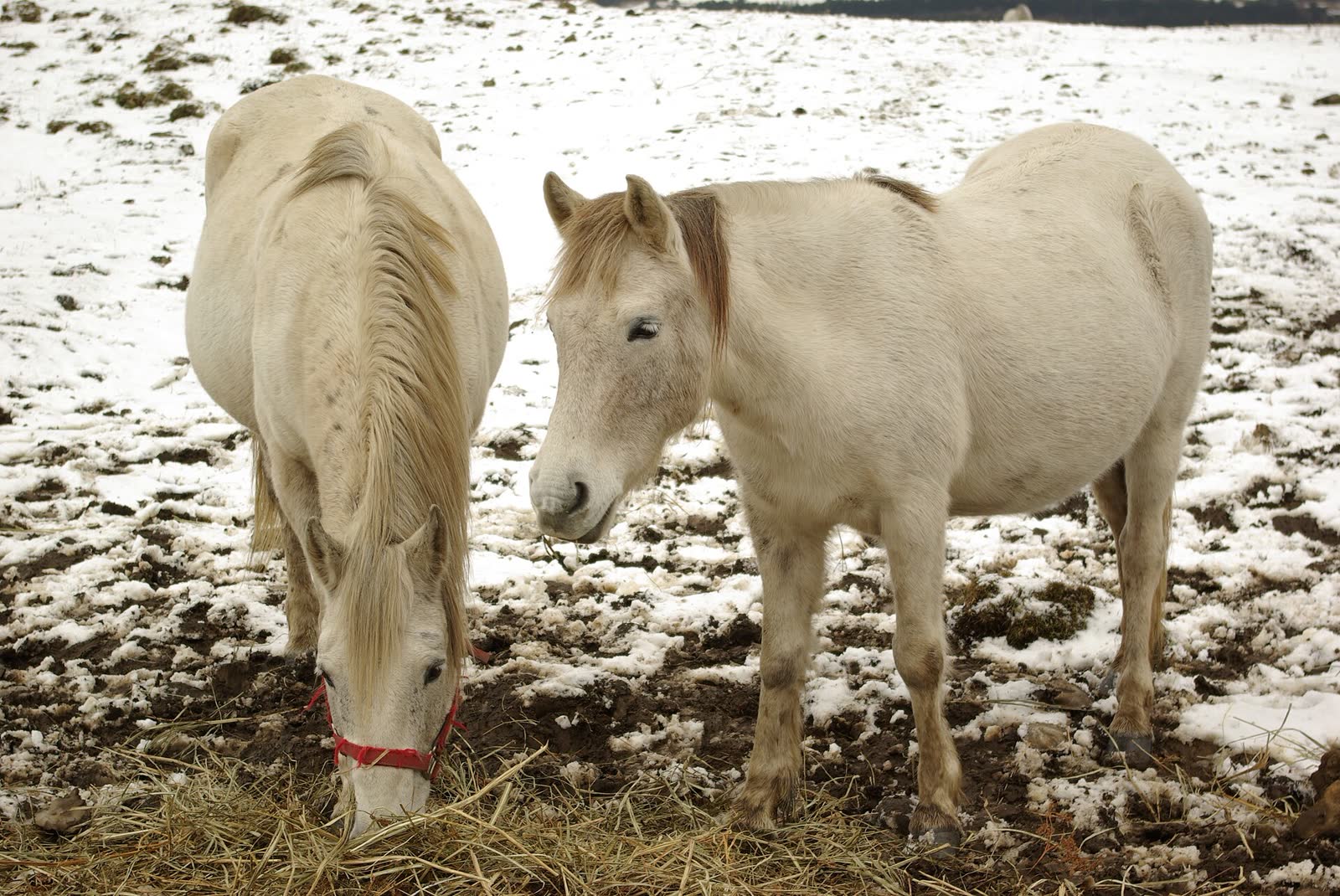
Jeju horses and Halla horses are both raised on Jeju Island, but they have different roots. The Jeju horse is a small native horse that has been bred on Jeju for a long time. It was designated Natural Monument No. 347 in 1986, and its pedigree is managed separately. The Halla horse comes from crossing Jeju horses with Thoroughbreds and is also called the Jeju-bred horse. It has mainly been bred for racing, and riding horses based on it are now being developed as well.
The Jeju horse: a small, hardy native breed
The Jeju horse is often called the Jeju pony. It also has the old name gwahama (과하마), meaning a horse small enough to pass under a fruit tree. Horses lived on Jeju long before, but breeding of horses close to today's Jeju horse began in earnest in the 13th century. In 1276 the Yuan dynasty brought 160 Mongolian horses to the island and set them loose in the area of today's Susan-ri, Seongsan-eup, Seogwipo. In the late Goryeo and early Joseon periods, close to 20,000 horses are said to have grazed there.
The Jeju horse has a large head and a thick neck, and its body is long compared with its height at the withers, the highest point of the shoulders. English Wikipedia gives a height of 121.8 to 128.9 cm for stallions and 113.2 to 127.3 cm for mares, with a weight of 230 to 330 kg. Its hooves are hard and thick, so it can run without horseshoes. It tolerates cold well and has mostly been kept at pasture without horse blankets or stables. It is generally docile and highly resistant to disease.
To be recognised as a Natural Monument Jeju horse, a horse must pass both a conformation inspection and a DNA test. The conformation standards are a gently sloping croup, buttocks that do not protrude, a head that is large for the body with round eyes, a thick neck with a glossy coat, and a strong overall impression. The DNA test checks 17 genetic markers, and registered horses have a microchip implanted in the neck muscle to track their records.
The Halla horse: a cross between Jeju horses and Thoroughbreds
From the 1960s, as farm machinery and modern transport spread, the Jeju horse was used less and less. In the late 1970s the Korea Racing Authority (KRA) brought in Anglo-Arabians and Thoroughbreds to produce racehorses, and some of the imported stallions were used to breed crossbreds. English Wikipedia notes that this crossbreeding was one reason the number of native Jeju horses fell, and that by the mid-1980s there were only about 1,200 Jeju horses.
A 2021 paper in the journal Animals describes the Halla horse as a cross between the Jeju horse and the Thoroughbred, bred for racing. Citing the Livestock Promotion Agency, the same paper states that 5,223 Jeju horses and 5,201 Halla horses had been registered so far. The two are registered in similar numbers.
Since 2009 the Rural Development Administration has crossed Jeju horses about 120 cm tall with Thoroughbreds about 165 cm tall to develop riding horses of the Halla line. The aim is to address the fact that most riding horses in Korea are former racehorses or imports, which are tall, hard for beginners and children to ride, and demanding to look after. A 2018 news report said the project produced black horses and black-and-white pinto horses, which are rated the highest among riding horses, and that the horses also had a docile temperament, which matters for safe riding.
How far apart the two horses are genetically
A 2018 study compared the genomes of Jeju horses, Thoroughbreds and Jeju crossbreds (Jeju horse × Thoroughbred) using a SNP chip, which reads single-letter differences in DNA. The fixation index (FST), a measure of genetic difference between populations, was highest between Jeju horses and Thoroughbreds at 0.113 and lowest between Jeju crossbreds and Thoroughbreds at 0.031. Population structure analysis also placed the Jeju crossbreds closer to the Thoroughbred than to the Jeju horse. Expected heterozygosity, a measure of genetic diversity, was highest in the Jeju crossbreds at 0.351, followed by the Thoroughbred at 0.337 and the Jeju horse at 0.311. The researchers also found signs of selection near the LCORL/NCAPG and PROP1 genes, which are known to influence body size.
A 2021 study examined variants of a gene called SPRN using hair samples from 141 Jeju horses, 88 Halla horses and 194 Thoroughbreds. It found four variants, and the distribution of genotypes and alleles in Jeju horses was significantly different from that in Halla horses and Thoroughbreds. One of the variants was not found in Thoroughbreds, so the researchers suggested it could serve as a marker to tell Thoroughbreds apart from Jeju and Halla horses. They noted that because the Halla horse comes from crossing the two breeds, its genetic traits are likely to reflect both.
Points that are easy to confuse
- Not every horse seen on Jeju is a Jeju horse. Many Halla horses and Thoroughbreds also live on the island, and the Natural Monument Jeju horse refers only to horses registered through pedigree records or through conformation inspection and DNA testing.
- The Halla horse comes from crossing Jeju horses with Thoroughbreds. In the genome study it came out closer to the Thoroughbred than to the Jeju horse.
- The name "Jeju-bred horse" is not a term for every horse born on Jeju. It is another name for the Halla horse.
Sources
- Wikipedia, Jeju horse
- Korean Wikipedia (in Korean), Jeju horse
- Genes & Genomics (2018), Genome-wide analyses of the Jeju, Thoroughbred and Jeju crossbred horse populations (PubMed)
- Animals (2021), The first report of genetic polymorphisms of the equine SPRN gene in Jeju and Halla horses (PMC)
- Jeju Ilbo (in Korean), 26 April 2018